
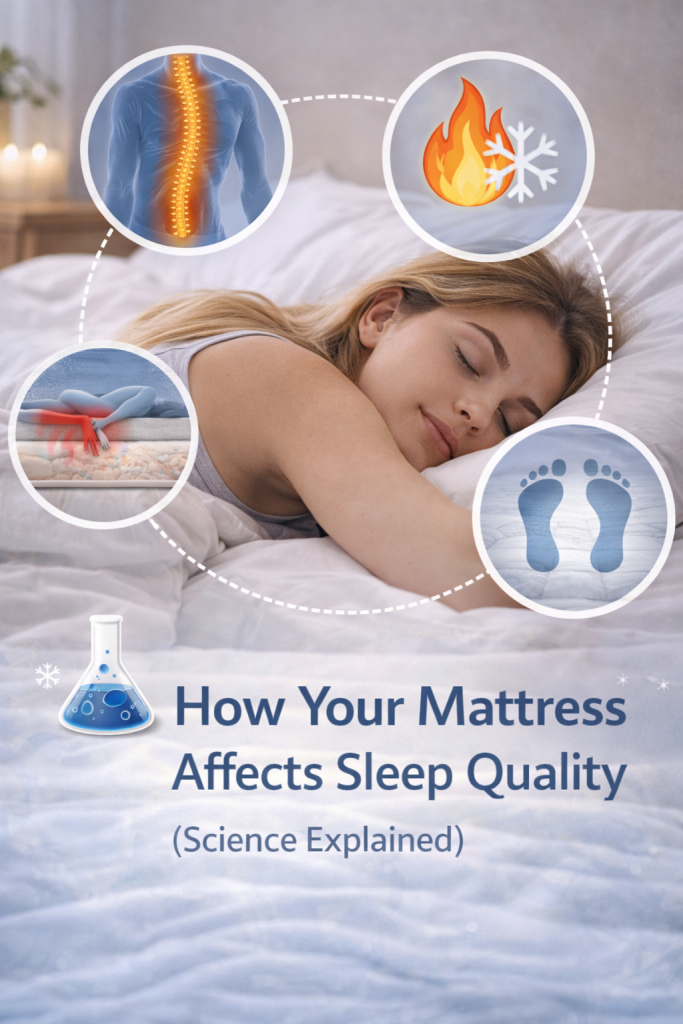
When people struggle with sleep, they often blame stress, screen time, or caffeine. While those factors do matter, one of the most overlooked influences on sleep quality is something you use every single night: your mattress.
Your mattress doesn’t just affect how comfortable you feel when you lie down — it plays a major role in spinal alignment, pressure relief, temperature regulation, and how deeply your body can relax. Let’s break down the science behind how your mattress impacts sleep quality and why choosing the right one matters more than you might think.
1. Spinal Alignment and Muscle Relaxation
One of the primary jobs of a mattress is to keep your spine in a neutral position while you sleep. When your spine is properly aligned, your muscles can relax, your joints are supported, and your body can fully recover overnight.
If a mattress is too soft, your hips and shoulders may sink too deeply, causing the spine to curve unnaturally. If it’s too firm, pressure builds in certain areas, forcing muscles to stay tense for support. Both situations can lead to restless sleep, stiffness, and morning aches.
Studies in sleep ergonomics show that mattresses offering balanced support — not too soft, not too firm — are associated with reduced back pain and improved sleep quality. This is why mattress firmness should match your sleep position and body type rather than follow a one-size-fits-all rule.
2. Pressure Points and Blood Circulation
Pressure points occur where your body presses most firmly against the mattress, commonly at the shoulders, hips, and lower back. When pressure isn’t evenly distributed, it can restrict blood flow and trigger discomfort, causing you to toss and turn throughout the night.
Modern mattresses, especially memory foam and hybrid designs, are engineered to redistribute weight more evenly. By reducing pressure at key points, these mattresses help improve circulation and reduce nighttime movement — both of which are linked to deeper, more restorative sleep cycles.
If you frequently wake up with numb arms, sore hips, or shoulder pain, your mattress may not be relieving pressure effectively.
3. Temperature Regulation and Sleep Cycles
Your body temperature naturally drops as you fall asleep, signaling your brain that it’s time to rest. A mattress that traps too much heat can interfere with this process, leading to frequent awakenings and lighter sleep stages.
Research shows that sleeping in a cooler environment supports longer periods of deep and REM sleep — the stages most important for memory, mood, and physical recovery. Mattresses with breathable materials, cooling foams, gel infusions, or airflow-supporting coils help regulate temperature and prevent overheating.
Hot sleepers, in particular, may experience significant improvements in sleep quality simply by switching to a mattress designed for cooling.
4. Motion Transfer and Sleep Disruption
If you share a bed, motion transfer can play a big role in how well you sleep. Every movement — turning, getting up, or shifting positions — sends vibrations through the mattress. Poor motion isolation can cause micro-awakenings, even if you don’t fully remember waking up.
Foam and hybrid mattresses tend to absorb movement better than traditional innerspring designs. By limiting motion transfer, these mattresses allow both partners to sleep more soundly, improving overall sleep efficiency.
Over time, fewer disturbances add up to better energy levels, mood, and focus during the day.
5. Mattress Age and Material Breakdown
Even the best mattress doesn’t last forever. Over time, materials break down, support weakens, and pressure relief diminishes. An aging mattress may look fine on the outside but fail to provide proper support internally.
Sleep researchers suggest that most mattresses should be replaced every 7–10 years, depending on material quality and usage. Waking up tired despite adequate sleep time, increased pain, or visible sagging are common signs your mattress may be negatively affecting your sleep.
6. The Psychological Comfort Factor
Sleep quality isn’t purely physical — it’s psychological too. Feeling comfortable, supported, and relaxed in your bed signals safety to your nervous system. This can lower stress hormones like cortisol and help your body transition into deeper sleep more easily.
A mattress that feels right for you can improve sleep confidence, reduce bedtime anxiety, and create a positive association with rest. Over time, this contributes to more consistent sleep patterns and better overall well-being.
Final Thoughts
Your mattress plays a far greater role in sleep quality than most people realize. From spinal alignment and pressure relief to temperature control and motion isolation, the right mattress supports both your body and your brain while you sleep.
If you’re struggling with poor sleep, discomfort, or fatigue, it may be worth looking beyond sleep habits and taking a closer look at what you’re sleeping on. Investing in a mattress that suits your sleep style, comfort preferences, and physical needs isn’t just about comfort — it’s an investment in your health.
At SeekMattress, we believe better sleep starts with better information. Understanding the science behind your mattress is the first step toward waking up rested, refreshed, and ready for the day.





Leave a Reply