
Buying a new mattress is one of the most important decisions for your comfort and health. Since the average person spends about one-third of their life in bed, testing a mattress properly before purchase can make the difference between restless nights and quality sleep.
The mattress you choose affects your posture, spinal alignment, mood, and energy throughout the day. In this guide, we’ll break down everything you need to know about how to test a mattress in-store or at home—so you can make a confident and informed choice.
Why Testing a Mattress Matters
A mattress that looks plush and luxurious might not actually give your body the support it needs. Everyone’s comfort preferences and body types differ—what feels perfect to someone else may cause back pain for you.
Testing helps you identify the right firmness level, support structure, and comfort materials that match your unique sleeping style. Whether you’re a side sleeper who needs pressure relief or a back sleeper looking for firm support, testing is the only way to truly know if a mattress suits you.
Step 1: Know Your Sleeping Style and Needs
Before even visiting a showroom, take a few minutes to think about how you sleep. This self-assessment is key to understanding what you should be looking for.
Side Sleepers:
You need a slightly softer mattress to cushion your shoulders and hips. Look for medium to medium-soft options that relieve pressure while keeping your spine aligned.
Back Sleepers:
A medium-firm mattress is best to maintain proper spinal alignment while still offering comfort and support.
Stomach Sleepers:
Choose a firm mattress to prevent your hips from sinking and causing lower back strain.
Combination Sleepers:
Opt for a balanced medium firmness that supports movement and multiple sleeping positions comfortably.
Couples:
If you share your bed, consider motion isolation (so one person’s movement doesn’t wake the other) and enough width for both of you to stretch comfortably.
Step 2: Dress for the Test
When testing mattresses in-store, wear comfortable clothing similar to what you’d sleep in—such as a t-shirt and breathable pants. Avoid bulky jeans or heavy jackets that can distort how the mattress feels.
If possible, remove any thick coats or accessories. The goal is to replicate your real sleeping conditions to get an accurate sense of comfort and support.
Step 3: Lie Down and Spend Time on Each Mattress
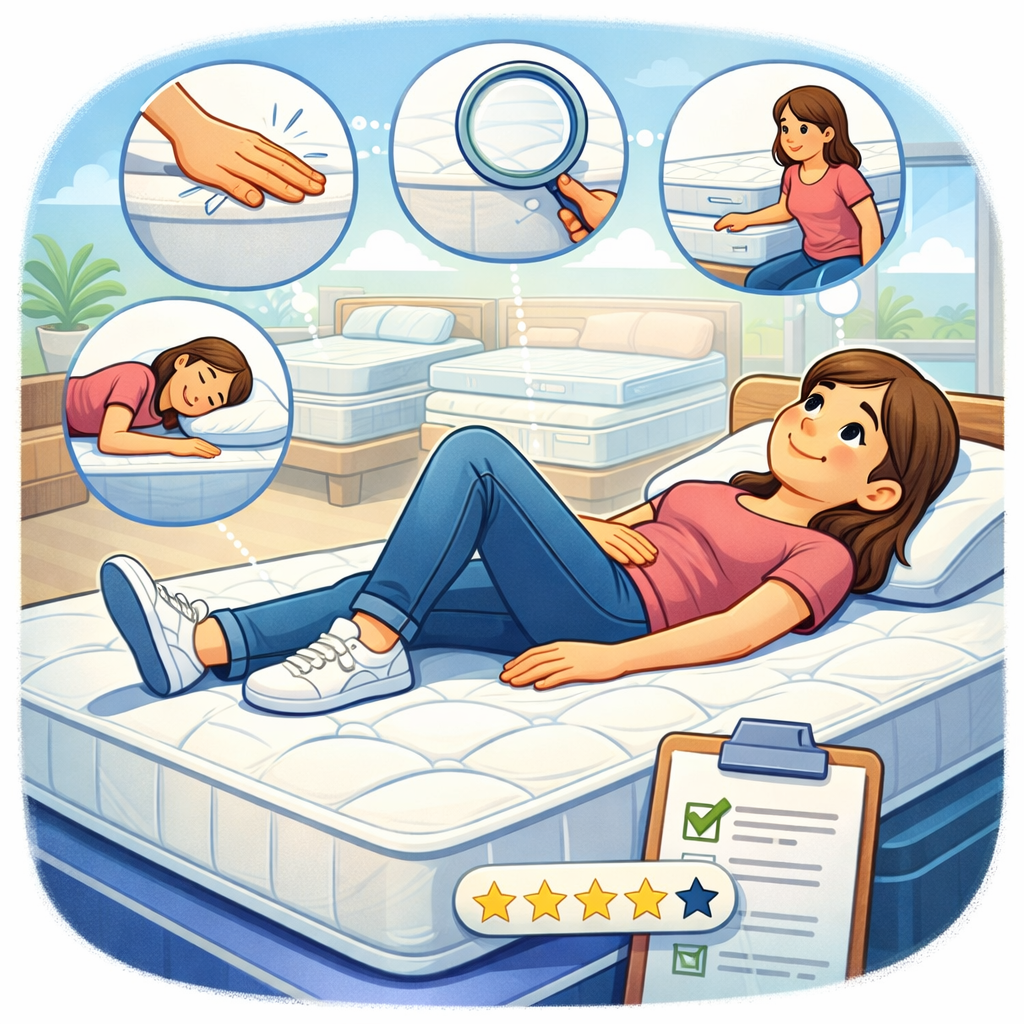
A quick sit-down isn’t enough. To test properly, lie on the mattress for at least 10–15 minutes. Try multiple sleeping positions—side, back, stomach—to feel how your body responds in each one.
Ask yourself:
- Does my spine feel neutral and supported?
- Are my shoulders and hips sinking too much or too little?
- Do I feel pressure points or discomfort?
If the store allows, test two or three models of different firmness levels and compare them side by side.
Pro tip: Bring your preferred pillow. How your neck and shoulders align with your headrest changes how a mattress feels overall.
Step 4: Check for Firmness, Support, and Bounce
There’s a big difference between firmness and support.
- Firmness refers to how hard or soft a mattress feels on the surface.
- Support refers to how well it keeps your spine aligned and prevents sagging.
You can gauge firmness using the “rule of thumb” test—press your hand into the mattress. Softer types will compress easily, while firmer ones push back more. However, only lying down gives you the true feel of support.
Bounce is another key factor. Too much bounce may cause partner disturbance, while too little can make the mattress feel flat or dead. Try rolling over—if it feels effortless, that’s a good sign of responsiveness.
Step 5: Pay Attention to Edge Support
Edge support matters more than most people realize. It prevents the mattress from collapsing when you sit or sleep near the edge.
Sit down on the side of the bed—does it sag excessively? Then lie near the edge and shift slightly; if you feel like you might roll off, the edge support is weak. This test is especially important for couples or those who share the bed space with pets or children.
Step 6: Test for Motion Isolation (For Couples)
If you sleep with a partner, motion isolation is crucial. To test this:
- Have your partner sit or move on one side of the mattress while you lie still on the other.
- Notice whether you can feel their movements.
Memory foam and hybrid mattresses with pocketed coils tend to perform best at minimizing motion transfer.
Step 7: Consider Temperature Regulation
If you often wake up sweating or overheated, look for a cooling mattress with breathable materials.
During testing, note whether you feel any heat retention after lying for several minutes. Mattresses with gel-infused foam, latex, or breathable coil systems usually stay cooler than solid memory foam versions.
Step 8: Research the Return Policy and Trial Period
Even after careful testing, it can take a few nights—or even weeks—to know if a mattress truly suits you. That’s why home trial periods are so valuable.
Most reputable brands now offer at least 90 to 120 days of trial time, allowing returns or exchanges if the mattress doesn’t meet your expectations. Always confirm the details:
- Is return shipping free?
- Is there a minimum testing period before returning?
- Will you receive a full refund or store credit?
Knowing these terms upfront gives you confidence in your purchase decision.
Step 9: Don’t Forget About Compatibility
Beyond feel and firmness, test how the mattress pairs with other essentials:
- Bed frame or base: Make sure it fits your existing frame or box spring.
- Pillow type: Some mattresses work best with specific pillow heights or materials.
- Sleeping partners or pets: The mattress should comfortably accommodate everyone.
If you’re testing in-store, ask whether the display bed includes the same base system, as variations can affect firmness and support.
Step 10: Take Notes and Compare Models
After testing several mattresses, the sensations can blur together. Write down:
- The brand and model name.
- Firmness level (soft, medium, firm).
- Key impressions like pressure relief, coolness, bounce, and support.
Once you’re home, review your notes and compare the pros and cons. Don’t rush the decision—choosing the right mattress should balance comfort, long-term durability, and lifestyle fit.
Bonus: Testing Online Mattresses
If you prefer buying online, look for brands offering:
- Detailed firmness guides (with sleeper type recommendations).
- Risk-free trial periods (at least 100 nights).
- Verified customer reviews about comfort and durability.
When the mattress arrives, give your body a few weeks to adjust before making final judgments. Sometimes, firmness or comfort perception changes slightly during the break-in period.
Final Thoughts
Testing a mattress properly isn’t just about comfort—it’s about long-term sleep health. The right mattress will keep your spine aligned, reduce tossing and turning, and promote deep, restorative rest.
By following these practical steps—lying on it, testing various positions, checking temperature and motion isolation—you can confidently choose a mattress that fits your body and your lifestyle.
Don’t settle for guesswork when it comes to sleep. Take your time, trust your senses, and remember: the best mattress is the one that feels right for you, night after night.





Leave a Reply